The brand had a well-reviewed line of cordless tools and a problem it could no longer postpone: every model was a separate product. Separate tooling, separate batteries, separate suppliers, separate certification files. Adding a fourth tool meant starting from zero again, and each new launch arrived later and costed more than the last.
They came to AVT with a brief written as a product and left with a brief written as a platform.
The starting point
We began where the previous projects had ended: with the numbers. A teardown of the current line showed that three tools sharing the same voltage shared almost nothing else — two motor suppliers, two battery interfaces, three chargers, and a gearbox designed twice for the same torque range.
- Tooling investment repeated on parts that could have been common.
- Four separate certification files for products sold in the same markets.
- A bill of materials nobody could compare across models.
- Lead times driven by whichever supplier was slowest that quarter.
Designing a platform, not three products
The architecture phase fixed what had to be shared before anyone drew a housing: battery interface, motor family, gearbox envelope, electronics platform and charging protocol. Everything above that line — housing, ergonomics, chuck, trigger feel — stayed free, because that is where the brand is actually recognised.
The result was a common core carrying 68% of the parts, with three distinct tools on top of it. Each new model added to the platform now reuses the certification basis, the supplier set and most of the tooling.
We stopped negotiating prices model by model and started designing a cost structure we could reuse.
Program lead, consumer tools brand
Cost decided before tooling
Cost engineering ran in parallel with design, not after it. Every candidate architecture came with a should-cost model built from material, process, cycle time and expected volume — so the trade-offs were visible while they were still cheap to make.
Two decisions carried most of the saving: consolidating the gearbox into a single supplier with the tooling owned by the brand, and redesigning the housing for a shorter cycle time and a smaller mould. Neither changed anything the user can see.
Compliance in parallel, not at the end
The market list was fixed in week two, and the applicable standards became design requirements in the same document as the functional ones. Pre-compliance testing started on the first representative prototypes, which is why the four submissions — EU, UK, Brazil and Mexico — passed without a redesign round.
The technical file, the reports and the approved component list live with the brand, in one structure, tied to the frozen configuration.
Market understanding
Weeks 1 — 4
Teardown of the current line, market and channel requirements, target price and volume per market.
Product architecture
Weeks 4 — 12
Platform definition: battery interface, motor family, gearbox envelope, electronics and charging.
Cost engineering
Weeks 8 — 18
Should-cost models per architecture, supplier consolidation, tooling strategy and ownership.
Prototype & validation
Weeks 14 — 30
Functional prototypes, life testing, drop and thermal tests, pre-compliance on representative samples.
Compliance by market
Weeks 20 — 38
Standards mapped to requirements, submissions for EU, UK, Brazil and Mexico, technical file assembled.
Industrialisation
Weeks 30 — 52
Tooling, process validation, control plan, first article inspection and pilot run.
Manufacturing & quality
From week 52
Production follow-up, incoming and in-line control, and lifecycle support for the platform.
What the brand has now
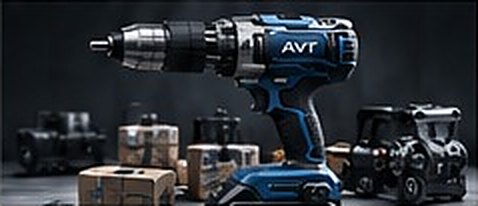
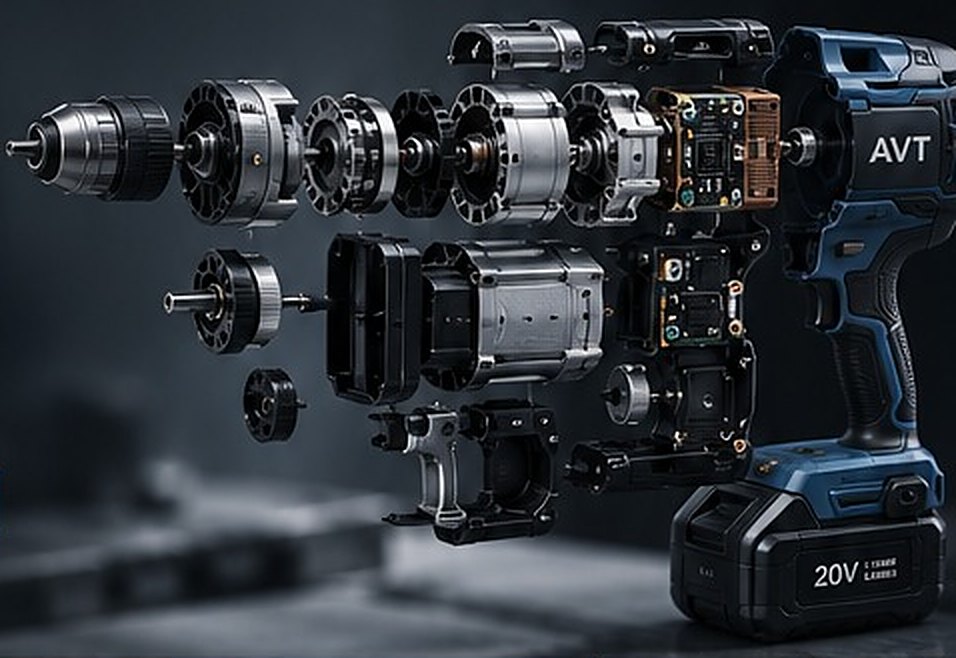
The fourth tool in the family is now in development. It reuses the platform, the suppliers and the certification basis, and it is scheduled to reach the shelf in less than half the time the previous generation needed.